- Average Hike Time: 1-6 hours
- Hiking Distance: Less than 1.5 to 4.0+ miles
- Trail Surface: Mostly paved, limited dirt
- Restroom Facilities: Many restrooms are available, including at the Hayden Museum, along the trail, at the Mammoth Lakes Library, and at the Visitor's Center at Shady Rest.
- Additional activities: Fishing, photography, picnics, shopping, food/beverage, bicycling, Hayden Cabin historical museum, auto tour.
By the end of the 1910's, a majority of the mines had played out and a new, long-lasting industry emerged. Tourists, arriving by automobiles and charged with a sense of adventure and freedom, began discovering the solitude, beauty, and recreational opportunities of the Sierra Nevada Mountains.
These early visitors would make the grueling two-day drive from Los Angeles to reach the pine forests and grassy meadows around Mammoth. It may have been gold that put Mammoth Lakes on the map, but it was fishing, hunting, camping, hiking, boating, and mountaineering that made the region famous.
In the early 1920's, the small town of Mammoth Camp was established in order to provide services to the steadily increasing number of summer visitors. An automobile garage, hotel, rustic rental cabins, bakery, general store, and post office were constructed near the banks of Mammoth Creek. During the winter months, the population drastically dropped and limited mail service was provided by dogsled.
Fast Fact: The meadow at the base of Mammoth Rock, to the southwest of the Snowcreek golf course, had a dairy and orchard near the turn of the century. Water was provided via irrigation ditch from the Lakes Basin above.
The Mammoth Lakes history walk begins at the Snowcreek Lodge and heads into town via the paved bike path. Within minutes, visitors will pass the Knight water wheel, which is located adjacent to the path. In 1902, this heavy wheel was transported by timber sled and mule team from Old Mammoth to its present location, which is the site of the former Wildasinn Hotel and Mammoth Camp Lodge. The water wheel was utilized to generate electricity for the popular mountain resort throughout the 1920's and one of the hotel's original log cabins remains nestled in the aspen trees behind the water wheel.
Far behind the water wheel, Mammoth Mountain Ski Area towers above town. This ski resort, started in 1945 by Dave McCoy, is now one of the top ski and snowboard destinations in the world. The mountain provides a dramatic backdrop for photography from this vantage point, especially in the golden light of late afternoon.
Continuing along the bike path and crossing Minaret Road, the trail passes the Snowcreek golf course and driving range on the right (southwest). This is the location of the former Mammoth Camp village. The path winds adjacent to the cool water of Mammoth Creek before crossing the stream near Old Mammoth Road. Remaining on the bike path, pass under the road and look for signs to the Hayden Cabin, which requires crossing the stream again on a bridge near the restrooms.
The Mammoth Museum at the Hayden Cabin has a fantastic collection spotlighting early Mammoth, with displays and antiques throughout the restored 1930's hunting and fishing cabin property. Visits are free, although donations are encouraged, and the staff is incredibly friendly and knowledgeable.
From the museum, it is possible to easily return to town or continue onwards to Shady Rest Park and the Mammoth Lakes Visitor's Center. To catch the Red Line/Town Trolley bus, head back a short distance into town to the bus stop across from Salsa's restaurant.
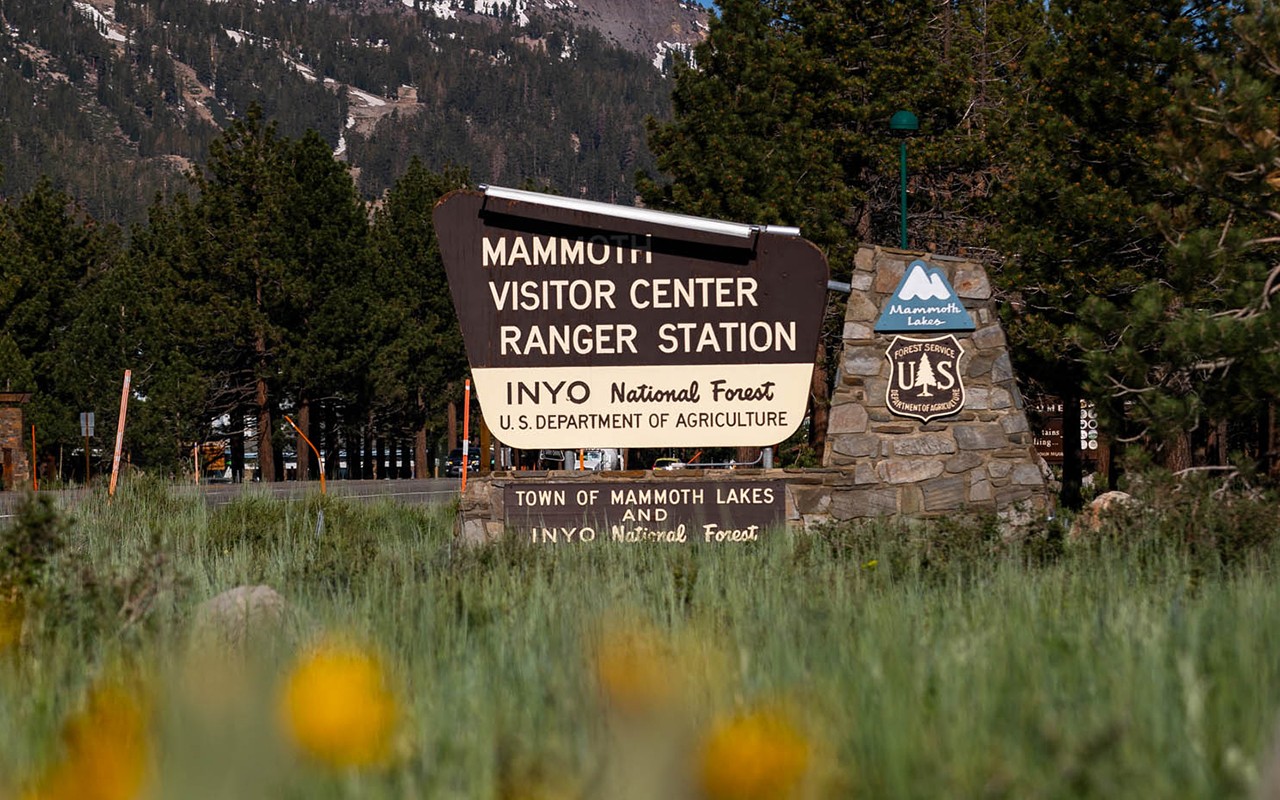
To continue onwards, cross Mammoth Creek and quickly take the bike path that intersects from the left (north), heading up the hill toward the town's library. Follow the Sierra Park Road for 0.3 miles and cross State Route 203 (Main St.) to arrive at the Mammoth Lakes Welcome Center.
These hikes allow visitors a chance to explore the region's early progression from a resource based economy to a tourist-based economy.